
Table of Contents

1. Introduction: Best Ultra-Light Portable and Thin Laptops 2025
Best Ultra-Light Portable and Thin Laptops 2025, remain one of the most searched categories, people want machines that travel easily, fit in a crowded bag, and do not make a commute feel heavier. But the category has matured modern ultra portables now blend premium materials, long battery life, and surprisingly capable processors powered by efficient silicon Apple’s M-series, Intel Lunar Lake / Core Ultra, and AMD’s Ryzen Ultra families. That means you no longer must sacrifice usability for portability, smart engineering and advances in chips and displays let thin laptops be both sleek and useful for real work.
2. What “Ultra-Light/Thin” Means in 2025: Specs, Weights, Materials
Typical size classes: 13″-14″ models dominate the ultraportable space because they balance screen real estate and weight. 16″ thin laptops exist but weigh more and are aimed at creators who want a big screen with better thermals of this best ultra-light portable and thin laptops 2025.
Weight: In 2025, “ultra-light” commonly means under 1.2-1.4 kg (2.6-3.0 lbs) for 13-14″ models. Featherweight flagships can approach 1.0 kg (2.2 lbs) if manufacturers prioritize portability over high TDP performance.
Thickness: 10-15 mm closed is common for sub-1.5 kg laptops, the thinnest consumer models get into single-digit millimeters at the thinnest edge but thickness is tapered.
Materials: Magnesium-alloy, CNC-milled aluminum, and carbon-fiber compounds remain the most used materials. Newer magnesium-lithium alloys and improved polycarbonate blends help reduce weight while keeping rigidity.
Thermals & cooling: Many thin models rely on passive or low-profile active cooling paired with efficient chips Apple’s systems and Intel/AMD efficiency cores let vendors push battery life without big fans. But sustained heavy workloads will still throttle unless the design includes higher-capacity vapor chambers or clever airflow.
3. Why You Should Care: Real Benefits Beyond Looks
- Portability and comfort: Lighter weight reduces fatigue on commutes, flights, and long working sessions in cafes or co-working spaces.
- Battery life improvements: Thin designs coupled with efficient chips can offer full-day battery life for typical productivity tasks.
- Instant productivity: Fast NVMe storage and responsive OS experiences mean thin laptops boot fast and resume quickly.
- Design and build quality: Premium materials and slimmer profiles look professional and feel premium useful for presentations and client meetings.
- Ecosystem features: Thinner models often ship with solid microphones, speakers, and displays making them good choices for frequent video calls.
4. Key Tradeoffs: What You Lose For Portability
- Throttled sustained performance: For CPU/GPU heavy tasks (rendering, large data sets), thin chassis often run into thermal limits. If you need consistent high performance, consider a slightly larger chassis or a dock-based workflow.
- Limited ports & upgradeability: Ultra-thin laptops often have fewer full-size ports and limited internal upgrade options (RAM soldered in many models).
- Repairability: Many ultra-thin designs prioritize compact layout over serviceability check repairability scores if that matters.
- Price premium: Achieving featherweight often requires premium materials and manufacturing, increasing costs.
5. Top 10 Ultra-Portable Laptops of 2025
Note: Below models represent a cross-section of what reviewers and buyers best ultra-light portable and thin laptops 2025; Apple MacBook Air (M4), Dell XPS 13 (2025), Lenovo Yoga 9i Aura, Asus ZenBook S / ZenBook 14, HP Spectre x360 latest, Acer Swift Go, Framework Laptop 13 modular ultralight, Razer Book portable creator, Microsoft Surface Laptop (7th or latest), and Honor Magic Book X series value ultralight. The full deep dives follow.
6. Deep Dives The Standout Models
Apple MacBook Air (M4) The Unmatched Thin & Light Daily Driver
Why it stands out: macOS optimization + Apple’s M4 silicon deliver class-leading battery life, snappy performance for everyday tasks, excellent display and speakers, and a chassis that’s thin yet sturdy. For writers, students, and many creators who prioritize portability and battery, the MacBook Air remains the top pick. The M4 variant in 2025 refines efficiency and pushes battery life further compared with older Intel/AMD rivals.
Pros: Best battery life for lightweight use, best-in-class trackpad and keyboard, strong software/ecosystem integration.
Cons: Limited ports, macOS only, limited gaming.
Ideal for: Students, writers, frequent travelers, macOS users.
Dell XPS 13 (2025 Intel Core Ultra/ Lunar Lake) Premium Windows Ultrabook
Why it stands out: The XPS 13 has long been the gold standard for Windows best ultra-light portable and thin laptops 2025 revisions refined the design, improved screen options (OLED available), and balanced performance and battery life thanks to Intel’s latest efficiency silicon. The XPS family remains a top choice for professionals who want premium Windows hardware in a small chassis.
Pros: Excellent build, great display options, premium fit & finish, good balance of battery and performance.
Cons: Some design choices (adaptive function bars, edge trackpads) may divide users, limited IO in the smallest variants.
Ideal for: Business professionals and Windows users who want a compact, stylish machine.
Lenovo Yoga 9i (Aura Edition) Versatile 2-in-1 Ultraportable
Why it stands out: The Aura edition blends lightweight design with touch and pen support, making it a top convertible for creatives on the go. It offers OLED displays and a comfortable keyboard in a light chassis. The Yoga line also focuses on sustained day-to-day portability without sacrificing the 2-in-1 convenience.
Pros: Convertible flexibility, strong display choices, good battery life.
Cons: Slightly higher weight vs strict clamshell ultra books.
Ideal for: Designers, note-takers, and those who want tablet+laptop capabilities.
Asus ZenBook S/ZenBook 14 (2025 Family) Value + Portability
Why it stands out: Asus’s ZenBook lineup balances price and premium features. The ZenBook S series often offers excellent displays (OLED options), solid battery life, and sub-1.3 kg builds at competitive prices. It’s a favorite for buyers who want thin design without paying Apple tax.
Pros: Good value, OLED display options, attractive designs.
Cons: IO placement and battery vary by SKU.
Ideal for: Budget-minded professionals and students who still want premium looks.
Acer Swift Go & Swift 14 AI Light and Budget Conscious
Why it stands out: Acer’s Swift family targets buyers who need a portable daily machine without breaking the bank. The Swift Go models combine lightweight chassis with respectable battery life and adequate performance for everyday tasks. These are often priced below premium ultrabooks, which makes them popular for students and price-sensitive professionals.
Pros: Affordability, reasonable battery life, solid screens.
Cons: Lower-tier materials in some models, average speakers.
Ideal for: Students and budget travelers.
Framework Laptop 13 the Repairable Ultralight
Why it stands out: If you want a thin laptop that’s also repairable and upgradeable, Framework continues to push the modular mid-range niche. It may not be the absolute lightest, but it offers a rare combination of portability and long-term upgradability. For users who treat their laptop as a long-term investment, Framework is unique.
Pros: Repairability, modular ports and components, good for longevity.
Cons: Not the absolute lightest or thinnest; premium price for modularity.
Ideal for: Tinkerers, sustainability-minded buyers, pro repair shops.
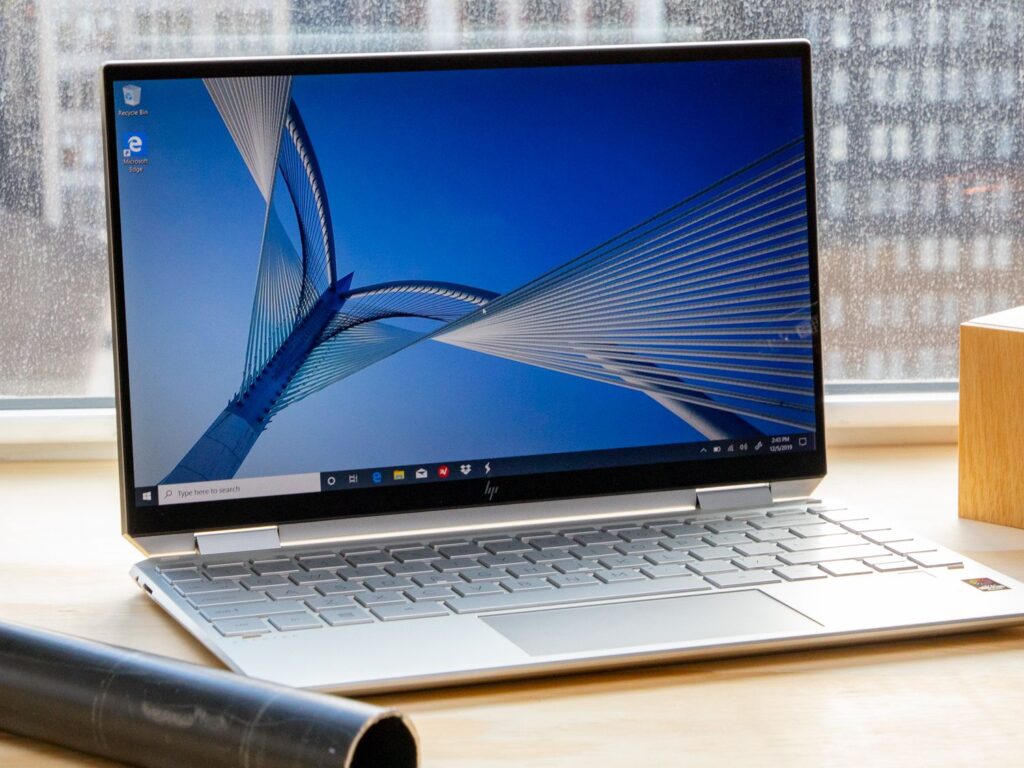
HP Spectre x360 Premium Convertible With Style
Why it stands out: HP’s Spectre line pairs premium materials with convertible convenience. The x360 remains light, yet often includes a well-tuned display and strong microphones/speakers for calls a boon for frequent remote workers. Spectre models best ultra-light portable and thin laptops 2025 often compete directly with Yoga and Surface in terms of design and portability.
Pros: Premium build, strong connectivity for thin chassis, good audio.
Cons: Slightly heavier than thinnest clamshells.
Ideal for: Road warriors who also want tablet mode for presentations.
Microsoft Surface Laptop Current Gen Clean Windows Experience
Why it stands out: Microsoft’s Surface Laptop delivers a clean Windows experience with a slim profile and great keyboard. It is a favorite with users who want minimal bloat and solid portability without sacrificing typing comfort. Recent Surface generations in 2025 refined battery life and weight.
Pros: Excellent keyboard, clean OS, good battery.
Cons: Limited port selection and soldered RAM in many variants.
Ideal for: Professionals and students wanting minimalistic design.
Razer Book/ Creator Ultralights Portable Creators’ Machines
Why it stands out: Razer’s non-gaming Book or Creator-series machines offer thin profiles with brighter screens and color-accurate panels targeted at creators who also want portability. They are designed to be light while offering slightly more performance headroom than some ultra portables.
Pros: Good screens, creative-focused features.
Cons: Pricier for the spec bracket.
Ideal for: Creators who need both portability and decent editing capability on the go.
Honor/ Xiaomi/ Regional Value Ultralights Strong Value Picks in Asia
Why they stand out: Regional vendors such as Honor and Xiaomi often produce very competitive thin and light models with great price/performance ratios, especially for buyers in Asia. These are ideal for buyers looking for modern thin designs on tight budgets.
7. How We Evaluate Ultra-Portable Laptops Metrics That Matter
When judging the best ultra-light portable and thin laptops 2025, focus on these metrics:
- Weight & dimensions: Real world carry weight matters more than the spec sheet account for chargers and small accessories.
- Battery life real world: Measured in web browsing, video streaming, and productivity scenarios.
- Thermal behavior & performance under load: How long it can sustain bursts of CPU/GPU-intensive work before throttling.
- Display quality: Brightness nits, color gamut sRGB/ P3, and reflectivity for outdoor use.
- Keyboard & trackpad experience: For productivity, these are essential.
- Port selection & expandability: Does it include at least two USB-C, and preferably a USB-A or HDMI via a dongle or full-size port?
- Build quality & repairability: Chassis rigidity, hinge quality, and ease of service.
- Price & value: Cost per feature and long-term value considering repairs and ecosystem.
- Software & firmware support: OS updates, drivers, and manufacturer reliability.
- Sustainability commitments: Recycled materials, energy ratings, and service options.
8. Buyer’s Guide Choose the Right Thin Laptop For Your Use Case
A. For Frequent Travelers/Commuters
- Priorities: Battery life, weight < 1.2 kg, quick charge, robust Wi-Fi 6/7, and good microphone/speaker for calls.
- Recommended models: MacBook Air M4 (for Apple users) or Dell XPS 13 (for Windows users).
- Tip: Carry a small USB-C charger (65W) and a lightweight sleeve.
B. For Students
- Priorities: Price, portability, decent keyboard, and battery life.
- Recommended models: Acer Swift Go, Asus ZenBook 14, Honor MagicBook X.
- Tip: Look for student discounts or refurbished units to save.
C. For Creatives On The Go
- Priorities: Color-accurate OLED or mini-LED display, pen support (if relevant), and a bit more thermal headroom.
- Recommended models: Lenovo Yoga 9i Aura, Asus ZenBook S (creator SKUs), Razer Book.
- Tip: Consider a small portable monitor or carry a USB-C to HDMI dongle for client reviews.
D. For Business Users
- Priorities: Security features biometric login, TPM, durable chassis, professional design, and service plans.
- Recommended models: Dell XPS 13, HP Spectre x360, Surface Laptop.
- Tip: Look for on-site warranty options and enterprise BIOS features.
E. For Developers or Light Programmers
- Priorities: Comfortable keyboard, enough RAM (16GB recommended), fast NVMe storage.
- Recommended models: MacBook Air M4 (ARM-native toolchain improving), Dell XPS 13, Framework for customizability.
- Tip: If using Docker intensively, check for virtualization performance on ARM vs x86.
9. Ports, Display, Battery, Thermals, and Repairability
When you read a spec sheet, tick off for the best ultra-light portable and thin laptops 2025 as under:
- Minimum RAM & Storage: 16GB RAM recommended; 512GB SSD ideal as baseline for most users.
- Display: OLED / mini-LED or IPS with at least 400 nits and 100% sRGB / wide gamut for creators.
- Battery: Aim for 10+ hours real-world for note-taking and browsing; 15+ hours is excellent.
- Ports: At least two USB-C one for charging, and one USB-A or HDMI if you prefer less dongling. Thunderbolt 4 is a plus.
- Thermals: Look for vapor chamber or multi-heat pipe systems in thin designs if you run heavier workloads.
- Repairability: Check manufacturer scores (iFixit, Framework) or vendor policy for swaps.
- Weight: Under 1.3 kg is ideal for carry comfort.
- Warranty: 1-3 years; consider extended coverage for travel.
10. Must-Have Accessories For Ultra-Portable Laptops
Must have accessories for the best ultra-light portable and thin laptops 2025 are as under:
- Compact 65–100W USB-C charger: Reduces the size of your packing.
- USB-C hub with HDMI & USB-A: Adds convenience for external displays and peripherals.
- Slim laptop sleeve or folio: Protects the chassis during transit.
- Portable SSD (NVMe in a small enclosure): Offload large media files without upgrading the internal drive.
- USB-C power bank with PD 100W: For charging on long flights and hospitals.
- Small foldable Bluetooth mouse: For extended editing and ergonomics.
11. Frequent Ask Questions (FAQs)
Generally people asks question regarding the best ultra-light portable and thin laptops 2025:
Q: Will a thin laptop be good for gaming?
A: Not usually. Thin laptops optimize for efficiency rather than sustained GPU horsepower. For gaming, look at thin gaming laptops with better cooling or carry an eGPU/dock where supported.
Q: Are thin laptops harder to repair?
A: Often yes. Many thin models solder RAM and use bonded parts. Framework is a notable exception focusing on repairability.
Q: Does a thinner laptop mean worse speakers?
A: Not necessarily some vendors invest in clever speaker placement and software tuning. But very thin models may still lack deep bass due to limited speaker volume.
Q: How important is the charger size?
A: Significant. Smaller chargers reduce travel burden; many ultralights support USB-C PD, so you can use a shared charger across devices.
12. Final Recommendation
If you want the single best combination of portability, battery life, and everyday performance in 2025, MacBook Air M4 is hard to beat for Apple users. For Windows users seeking a similar balance, the Dell XPS 13 (2025) and Lenovo Yoga 9i Aura Edition are excellent choices depending on whether you want a clamshell or a convertible. For budget buyers, Asus ZenBook and Acer Swift series provide great value without sacrificing too much on weight of the best ultra-light portable and thin laptops 2025.
If repairability and long-term ownership matter most, Framework offers the rare combination of modularity and portability. Creators who need touch and pen support should prioritize the Yoga or Spectre families. Ultimately, pick the device that aligns with your daily tasks, preferred OS, and how much you value weight vs sustained performance.
13. Conclusion
Choosing the right and best ultra-light portable and thin laptops 2025 is about balancing portability with practical usability. Recent advances in chip efficiency, display quality, and thermal engineering mean you can now get a laptop that feels effortless to carry without surrendering the features you need to be productive. Whether you’re a student seeking a daily driver, a creative who needs a color-accurate OLED screen in a slim profile, or a business traveler who values battery and build quality, the market in 2025 offers excellent options across price tiers.
Key takeaways: prioritize real-world battery life, comfortable typing, and a display that matches your workflow. For most people, a 13-14″ model under 1.3 kg strikes the best compromise between portability and productivity. If you frequently run heavy workloads, consider a slightly larger chassis or try to pair a thin laptop with an efficient dock at your home or office for burst performance without sacrificing portability. Stay mindful of ports, RAM soldering, and warranty/service options these determine the longevity and real value of your purchase more than thinness specs alone for this best ultra-light portable and thin laptops 2025.