
Table of Contents

Introduction: Best Rise of Dual-Screen Foldable Laptops 2026
The New Era of Laptop Innovation
The best rise of Dual-Screen foldable laptops 2026 once a traditional clamshell device with a single screen is undergoing one of the most exciting transformations in consumer tech history. The best rise of dual-screen foldable laptops 2026 is reshaping what portable computing can do for professionals, creatives, students, and gamers alike.
Unlike conventional laptops, these next-generation machines prioritize expanded workspace, multitasking efficiency, flexibility, and immersive experiences without compromising on portability. Instead of a static single display confined to a keyboard dock, users now have multiple screens, flexible folding panels, or even rollable displays that redefine productivity.
This shift reflects advancements in display technology (like OLED and flexible panels), hinge engineering, and user-centric design philosophies. Tech giants such as ASUS, Lenovo, HP, Huawei, and even future entrants like Amazon are racing to innovate blending productivity, entertainment, and mobile computing in a seamless package.
In this comprehensive article, we will explore the rise of dual-screen laptops, the evolution of foldable laptops, what sets them apart from traditional models, the key trends driving adoption in 2026, detailed model breakdowns, real-world use cases, pros & cons, and a look at future prospects of this exciting category.
Why Dual-Screen and Foldable Laptops Matter in 2026
The laptop industry has always responded to user needs from lighter ultrabooks to powerful gaming rigs. Today’s users face a different challenge: productivity and multitasking without sacrificing mobility.
Dual-screen and foldable laptops deliver on several fronts:
- Enhanced productivity: More screen real estate for multitasking, comparing documents, coding, and creative tools.
- Better mobility: Foldable and dual panels replace the need for external monitors while traveling.
- Future-proof design: Flexible display technology opens doors to new interaction modes like tablet conversions and extended desktops.
- Improved creativity: Designers and creators can spread interfaces across screens, streamlining workflows.
- Entertainment value: Gamers and media lovers get larger visual spaces without carrying extra monitors.
This evolution is also driven by increasing GPU and AI performance capabilities coupled with improvements in materials and manufacturing, making complex designs viable for mainstream adoption.
Understanding Dual-Screen Laptops
What Are Dual-Screen Laptops?
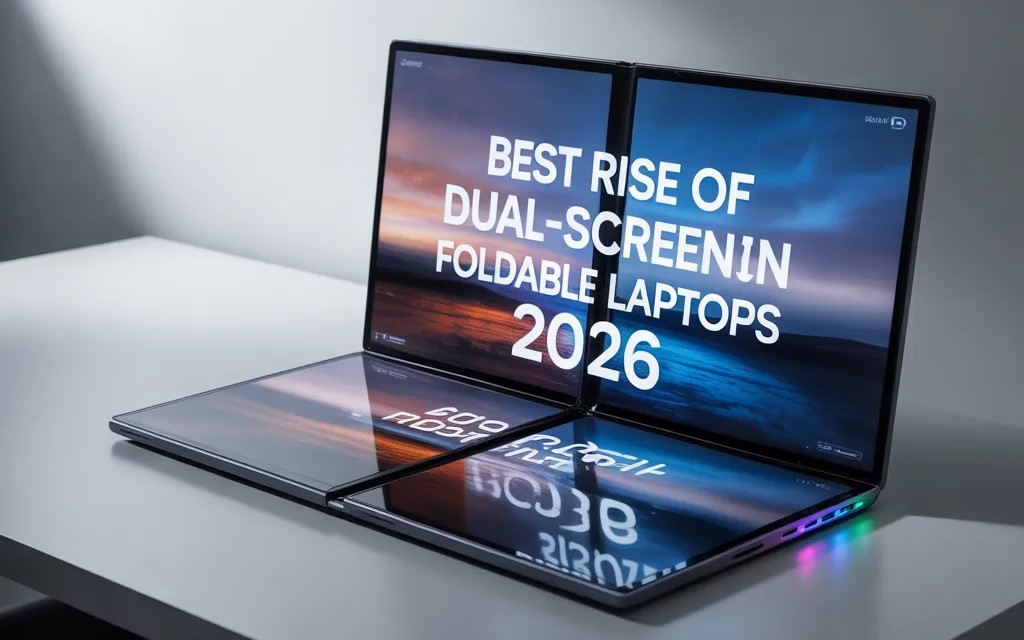
The best rise of dual-screen foldable laptops 2026 feature two distinct display panels integrated into the system. Unlike miniaturized secondary displays (like touch bars or notification screens), these are full-sized screens that work together to create a larger digital canvas.
For example, devices such as the ASUS Zenbook DUO (UX8407) offer two stacked or side-by-side displays that can run separate applications simultaneously ideal for running spreadsheets on one screen while writing reports on the other.
Other dual-screen designs include the Lenovo Yoga Book 9i Gen 10 and the ASUS ROG Zephyrus Duo, where the second display assists gaming dashboards, creative tools, or multitasking controls.
Dual-Screen Form Factors
There are several types of dual-screen layouts:
- Stacked Screens (Vertical): Both screens align in a stacked manner, optimizing vertical space for multitasking.
- Side-by-Side Screens: Screens placed next to each other mimic dual monitors.
- Adjustable Angles: Some designs allow repositioning of displays for comfort or ergonomic benefits.
Each layout serves different user needs whether you’re editing video, coding, writing, or gaming.
Why Dual-Screen Is Gaining Popularity
The best rise of dual-screen foldable laptops 2026 were not new ideas early attempts like dual-screen concepts in past years didn’t catch mainstream attention. However, 2026 models benefit from years of refinement, perfected hinges, OLED displays with wide color gamuts and high refresh rates, and integrated software enhancements that make dual panels more useful than ever.
Rise of Foldable Laptops
What Are Foldable Laptops?
Foldable laptops replace traditional rigid screens with a flexible display, allowing a single panel to unfold into a larger surface or collapse into a compact form factor. Think of them as an evolution of foldable smartphones but on a larger scale.
A notable example is the Huawei MateBook Fold Ultimate Design which features an 18-inch OLED that folds offering versatility to work as a large tablet or standard laptop.
Driving Forces Behind Foldable Tech
Several trends are driving foldable laptops:
- Flexible OLED advancements that allow bendable screens without loss of picture quality.
- Innovative hinge engineering that keeps foldable panels durable.
- User demand for portability with a large workspace especially among creative professionals and remote workers.
Analysts predict the foldable laptop segment will continue attracting manufacturers, with even new players like Amazon reportedly joining the race by late 2026 or 2027.
Key Advantages of Dual-Screen & Foldable Laptops
Enhanced Multitasking
One of the biggest benefits is multitasking. With dual screens or foldable panels:
- Users can run multiple applications side-by-side.
- Creators can expand tool panels across screens.
- Gamers enjoy companion dashboards for stats or chats.
This efficiency boost is particularly valuable in professional scenarios like coding, editing video, financial analysis, or project management.
Flexible User Modes
Foldable laptops can transition between laptop, tablet, or even book mode, making them highly adaptable for different use cases, including note-taking, presentations, or creative sketches.
Productivity Boost
With larger workspace and multitasking, productivity increases, especially when paired with touchscreen and stylus support. Many models also support detachable keyboards for varied workflows.
Innovative Design Language
These laptops bring eye-catching designs that attract early adopters and tech enthusiasts blending aesthetics with performance.
Performance & Technology Behind the Innovation
Performance is a crucial part of this evolution. Most leading models in 2026 are powered by next-generation processors and GPU architectures capable of handling multiple high-resolution displays without lag essential for creative and professional workloads.
Processor Power
Modern dual-screen and foldable laptops increasingly use powerful CPUs such as Intel’s Panther Lake and AMD Ryzen AI series designed for multitasking and AI workloads. These chips support seamless screen transitions, multiple apps, and heavy tasks like video editing.
Display Technology
OLED panels with high refresh rates and HDR support dominate this category, offering bright, colorful, and sharp visuals. High refresh rate screens (120Hz+) enhance fluidity especially for gaming or motion content.
Battery Efficiency
Because dual screens and foldable panels consume more power, manufacturers are improving battery capacities and efficiency algorithms to deliver respectable battery life even with expanded displays.
Top Dual-Screen & Foldable Laptops of 2026
1. ASUS Zenbook DUO (2026)
- Dual 14-inch 3K OLED displays
- Intel Panther Lake Ultra X9 processor
- 144Hz refresh rate screens
- Enhanced hinge and improved battery
This model leads dual-screen productivity laptops with refined design and multitasking depth.
2. Lenovo Yoga Book 9i Gen 10
- Dual OLED screens with stylus support
- Lightweight and portable
Ideal for creative professionals and students who need multiple workspaces.
3. ASUS ROG Zephyrus Duo
- Dual 16-inch 3K OLED screens
- High-end performance for gaming and creation
This model integrates powerful gaming hardware with dual displays, perfect for multitaskers who game and work.
4. Huawei MateBook Fold Ultimate Design
- 18-inch folding OLED
- Ultra mobile design & large streaming workspace
A pioneer in foldable laptop design with portable performance.
Use Cases: Who Benefits Most?
Professionals & Remote Workers
Multitask across spreadsheets, video calls, and documents without external monitors.
Content Creators
Edit video on one screen while monitoring effects or timelines on another.
Students & Educators
Run research tools, note apps, virtual classrooms, and assignments simultaneously.
Gamers
Play on one panel while streaming or monitoring chats on the other.
Challenges & Considerations
While exciting, this trend comes with trade-offs:
- Cost: Premium build and new tech mean high prices.
- Durability Risks: Moving parts and hinge mechanisms require robust design.
- Software Optimization: Not all apps are split-screen optimized out of the box.
- Battery Drain: Multiple screens can reduce battery life compared to single-panel laptops.
Despite these challenges, manufacturers continue refining solutions to address them.
Future Outlook
Looking ahead, best rise of dual-screen foldable laptops 2026 are poised to become more mainstream. Improved production techniques and competition may lead to lower prices and broader adoption. Rumors of Amazon entering the foldable laptop market hint at further innovation and competition.
Additionally, software ecosystems are evolving to better support multiple displays, gestures, and adaptive layouts making these devices more useful across industries.
Conclusion
The best rise of dual-screen foldable laptops 2026 represents a major milestone in portable computing. These machines break down the limits of traditional laptop design to provide powerful, flexible, and immersive computing experiences. Whether you’re a professional seeking productivity gains, a creative pushing the boundaries of design, or a gamer who wants more screen real estate, this new class of laptops delivers something for everyone.
As OLED and flexible-display technology matures, and major manufacturers invest heavily in this category, the laptop segment is entering a new age one where the screen is no longer just a window into your work but a dynamic workspace itself.